Natal Chart
Enter your date, time and place of birth and see the sky exactly as it stood at the moment you were born — every planet, house and aspect explained in plain language. The calculator is free, requires no sign-up, and never asks for an email. Astrology is a symbolic tradition rather than a science, so treat the result as a lens for reflection, not a prediction.
Astrology is a symbolic tradition, not a science. Use this as reflection, not prediction.
Save the details that make the wheel yours
Date, time and place establish the chart. If you do not know the time, leave it empty: houses will be omitted, never guessed.
How the natal chart calculator builds your chart
Three inputs are needed, and the second one matters more than most people expect. Your date of birth sets the planetary positions and the sun sign. Your time of birth sets the ascendant and the house cusps, which shift by roughly one degree every four minutes, so a vague recollection of “sometime in the morning” produces a chart that is right about the planets and wrong about the houses. Birth certificates usually record the time, and hospital records often do. Your place of birth sets the geographic frame the sky is drawn from, and city-level accuracy is enough.
If no time is available, the calculator still runs and returns the chart with the houses omitted rather than invented. That honesty matters: a natal chart calculator that hands you confident house placements without a birth time is guessing on your behalf, and the houses are precisely the part people care about most.
What a free natal chart includes
There is no account, no email capture and no interstitial standing between you and the result — enter three details, read the chart, and come back whenever you like. A free natal chart here contains everything that usually sits behind a paywall elsewhere: all ten planetary positions with sign and degree, all twelve house cusps, the ascendant, midheaven and four angles, every major aspect between planets, and a written explanation of each placement.
Offering a natal chart free of paywalls, greyed-out quadrants and premium tiers is the entire point of this page. There is no higher tier to upgrade to and no section of the wheel held back until payment; sites that demand your address before showing you your own chart have their priorities reversed.
Where to start when reading a natal chart
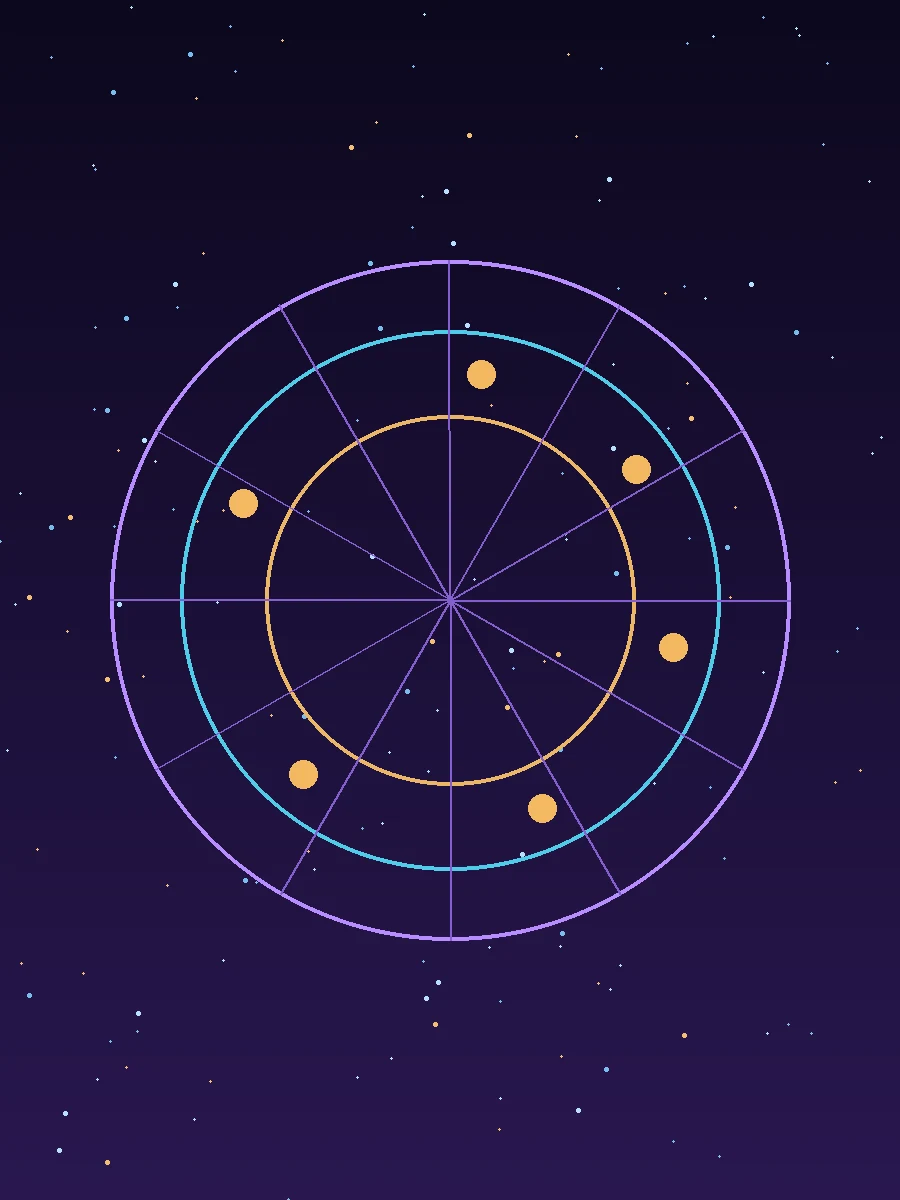
The wheel looks dense at first and resolves quickly once you follow a simple order. Begin with three placements: the sun for core identity, the moon for emotional wiring, and the ascendant for how you come across — this trio accounts for most of what people recognise in themselves. Move on to the personal planets: Mercury for how you think and speak, Venus for what you value and how you relate, and Mars for how you pursue and how you fight.
The outer planets — Jupiter, Saturn, Uranus, Neptune and Pluto — move slowly, so they say more about your generation than about you, except where they closely touch a personal planet. Finish with the aspects, which describe how all these parts interact. Every element is labelled in plain language on the wheel itself, so nothing needs to be looked up elsewhere.
Planets, signs and houses: what, how, where
Each placement in a natal chart is a sentence with three parts, and separating them makes the whole system legible. The planet is the what: Venus is the relating function, Mars is the drive, Mercury is the thinking. The sign is the how: Venus in Scorpio relates intensely and privately, while Venus in Gemini relates through talk and variety — the same function in a different style.
The house is the where: Venus in the tenth house points that function at career and public life, while Venus in the fourth points it at home and family. Read as what, how and where, the chart stops being a list of symbols and becomes a set of statements you can test against yourself. The twelve houses together cover identity, resources, communication, home, creativity, work, partnership, transformation, belief, career, community and the unconscious — one map of a whole life.
Aspects: the tensions and talents a chart maps
Aspects are the angles between planets, and they show whether two functions cooperate or obstruct each other. A conjunction fuses two planets’ functions, for better and worse. An opposition sets up a tug-of-war between two equally legitimate needs. A square, at ninety degrees, creates friction that demands action, while trines and sextiles bring ease — talent that flows without effort and, for that reason, is usually neglected.
A chart full of squares is not a worse chart; it is often the more interesting one, because internal friction is what pushes people to do something with their lives while trines get taken for granted. Readings that describe only the easy aspects are selling comfort rather than insight.
One chart, many names
The terminology confuses beginners constantly, so here it is plainly: natal chart, birth chart and astrological chart all refer to the same document — the sky at your birth moment, seen from your birthplace. Birth chart astrology and natal chart astrology therefore describe the same branch of the subject, one that reads a single moment rather than forecasting, and an astro natal chart is simply casual shorthand for the same thing.
A star chart is ambiguous: in astronomy it maps constellations for locating objects in the night sky, while in astrology it usually means the birth chart again. A horoscope is technically the chart itself, though everyday use has shrunk the word to the sun-sign paragraph in a magazine. A solar return is genuinely different — the chart of the moment the sun returns to its natal position each year. Whichever term you arrive with, the calculation is identical.
Synastry and comparing two charts
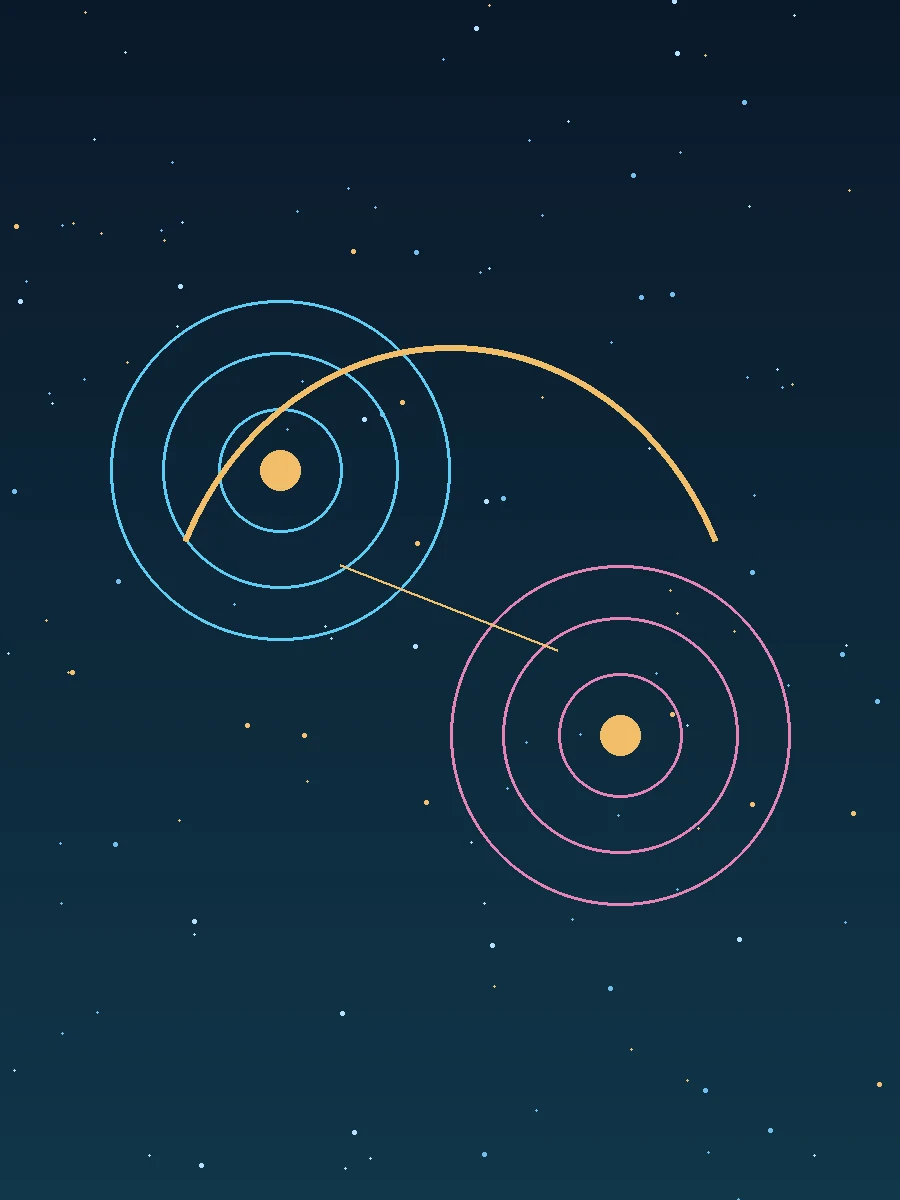
Placing two charts side by side is where many people find the subject most engaging, because it externalises a conversation about how two people actually differ. Synastry looks at how one person’s planets land in the other’s houses and what aspects form between the two sets: Venus-to-Mars contacts read as attraction, Saturn contacts as weight and duty, and Moon contacts as emotional recognition. Its real strength is naming a dynamic you already sense but have not articulated — “we want different amounts of closeness” is a more useful sentence than either person usually manages unaided.
What natal chart compatibility is not good for is deciding whether to be with someone. It describes tension; it does not grade a relationship, and no aspect between two charts has ever been the actual reason a couple worked or failed. Treat a difficult comparison as a map of where friction will sit, never as a verdict.
What to do once your chart is ready
The chart is a starting point rather than an answer. First, test it against what you already know: read the sun, moon and ascendant descriptions and check them against your own sense of yourself, keeping what fits and discarding what doesn’t — anything that only works if you squint is not telling you something; you are telling yourself. Second, use the friction points as prompts: squares and oppositions mark internal tension, and “these two parts of me pull against each other” is a genuinely useful question to sit with whether or not Saturn has anything to do with it.
Third, watch the transits. Where the planets sit today relative to your natal positions is what people mean when they talk about a difficult Saturn year, and it comes from the same chart you already have. Used this way, the chart works as a structured mirror — a use that does not depend on astrology predicting anything.
The honest limits of a natal chart
Do not use the chart for decisions you would otherwise make with evidence — job offers, medical choices, contracts, or whether to leave someone. Those are not chart questions. And do not confuse description with destiny: a placement describes a tendency, not an outcome. Astrology has been tested and does not predict results; it works as a symbolic language for thinking about personality and difference, which is a different and more modest claim.
Be sceptical, too, of anyone charging to “correct” your chart — the calculation is public mathematics, and nobody holds a better version of your sky. What does work is treating the whole thing as a structured mirror for reflection, which is why the practice has outlived every attempt to bury it.
Compatibility is a conversation, not a score
Compare patterns with care. A chart can prompt a useful conversation about difference; it cannot decide a relationship for you.
Compare natal charts
Questions about your natal chart
Is it really free?
Yes, entirely. There is no account, no email requirement and no paid tier.
What do I need to build one?
Your date, time and place of birth. The time matters most, because it sets the houses and the ascendant.
What if I don’t know my birth time?
The chart is still produced, with the houses omitted rather than guessed. The planetary positions remain; only the house framework is left out.
Does the free version include aspects?
Yes — all major aspects are shown, each with a written explanation.
Is a birth chart the same as a natal chart?
Yes. They are different words for the same document: the sky at the moment you were born, seen from your birthplace.
Can I check compatibility with someone?
Yes, if you have their date, time and place of birth — and ideally their agreement. Compatibility is a reflection tool, not a verdict on a relationship.
Does astrology actually predict anything?
No. It has been tested and does not. It works as a symbolic language for thinking about personality and difference, and that is how it is presented here.
Do I need to install anything or create an account?
No. The chart is calculated and displayed right away; there is nothing to install and no sign-up to complete.
Keep the chart human-sized
This site is offered for entertainment and reflection. Astrology is a symbolic tradition without scientific support, and nothing here should replace professional advice on health, finances, legal matters or relationships.